June 21st, 2010 ~ linda ~
2 Comments 
I was commenting yesterday during the match on the second segment match between Meltzer and Weinstein. Let’s look at the bidding in the Open Room first. East opened 3 in first chair vulnerable against not. Your partner Meltzer overcalls 3
 . Let’s follow along with Larsen.
Larsen – North
K73
 AK43
AK43
K95
 A104
A104
You start with a cuebid of 4 and partner bids 4. Do you pass? I wouldn’t but Larsen did. Here was the South hand.
| Meltzer – South
A86542
Q1076
A
J7 |
|
|
Looking at both hands you definitely want to be in slam. The best slam? Well if spades are 4-0 you may still make 6 (but not 6). Spades might play better when hearts are 5-1 offside and spades break. So hearts seems to be the right place.
It must feel like you are going to lose imps. But spades are 4-0 so if the other table gets to the wrong slam you have won the board.
So over to the other table. Here East did not preempt giving North-South free range. North’s 2NT bid did not show spades particularly. It showed a balanced hand with game values. This interesting bid allowed North-South to easily find the heart fit.
| West |
North |
East |
South |
| |
|
pass |
1 |
| pass |
2NT* |
pass |
3 |
So North knew that they had at least a 5-3 spade fit and a 4-4 heart fit. He chose 3 now, perhaps to find the spade keycards or maybe because he didn’t have a convenient way to support hearts and try for slam. (I think 4 here should be a cuebid with a heart raise, myself). Here is how the auction continued
| West |
North |
East |
South |
| |
|
pass |
1 |
| pass |
2NT* |
pass |
3 |
| pass |
3 |
pass |
4 |
| pass |
4NT |
pass |
5 |
North knew that they were off the spade queen but had the rest of the keycards. So what now? He bid 6. The problem: What is 6? Is it a grand slam try in spades or is it a choice of contracts or is it just to play. South decided it was a grand slam try. What is North looking for? Maybe the stiff diamond and an extra spade is what is needed? (North can’t really have four spades in this auction).
Anyway Meltzer bid 7. The hand with the QJ10x of spades doubled and the contract was quickly down 2. Yes, it is true that on a very good day the grand slam in spades makes but this is not the right contract.
I am trying to decide what the 6 bid should be. Should North just have agreed hearts in the first place?
Even if you think it is a grand slam try would you bid 7 with the South hand? Maybe not.
How would you assess the blame?
June 17th, 2010 ~ linda ~
No Comments
If you are interested in following the USBF Open Team trials you should have a look at the pre-bulletin. This Bulletin is actually the biggest one of the tournament and includes a lot of interesting information that will not be repeated in later bulletins (which are going to be 4 pages).
Round Robin play starts Friday June 18th. With 18 teams divided (based on seeding points) into the Bulls and the Bears. Each of the divisions plays a full round robin (9 boards) with the bottom 3 teams eliminated at the conclusion Saturday evening. The 12 remaining teams than play 6 more 9-board matches against the surviving 6 teams in the other division. (There is a fairly complex formula for how carry-over will be calculated, considering results from eliminated teams.) 8 teams with the most VP will move into the round of 16 joined by Meltzer and Robinson.
You may be confused about how 10 teams are considered the Round of 16. I was. The idea is that the 10 teams produced 5 winners to move into the Round of 8. They are joined by 3 teams who have byes to the Round of 8. I hope that makes it clear!
Here are some things to note:
“ BBO Vugraph starting with the Round of 16, in which we will probably cover 3 or 4
matches (there will be 5 matches in the Round of 16). The Round of 16 starts in the afternoon of Monday, June 21st.
From the Quarterfinals on, we will cover all of the tables in play.”
For cell phone logon, go to www.bridgebase.com/mobile.
The BBO schedule is the same every day:
10:00-12:10 CDT (Central Daylight Time) 12:25-2:35
3:45-5:55
6:10-8:20
or one hour later in Toronto, New York, Miami etc, and two hours earlier in Las Vegas, Los Angeles, Vancouver and other places West.
During the Round of 32, 16 and 8 each team will play different boards. This is a bit sad since it is fun to see how different great players handle the same hands. After that in the latter rounds they will use the same boards. Okay, I understand the need for security.
Thank you to the USBF for the BBO and the following:
After a session, you can review the Vugraph action on our Web Vugraphs, which show each hand played with a link to bidding and play records. Web Vugraphs are posted within about half an hour of completion of the Vugraph show
There is a fund of other information, some nice deals, humor and more in the bulletin including some predictions.
I am making no predictions but I am keeping a few pictures ready for the finals ….
(Thanks to Peggy Kaplan and Jonathan Steinberg for many of the photos).

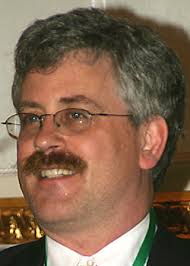
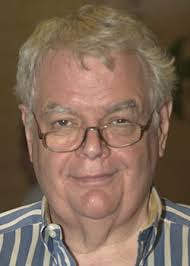

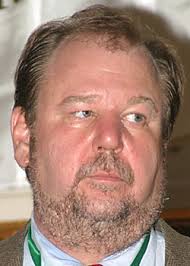


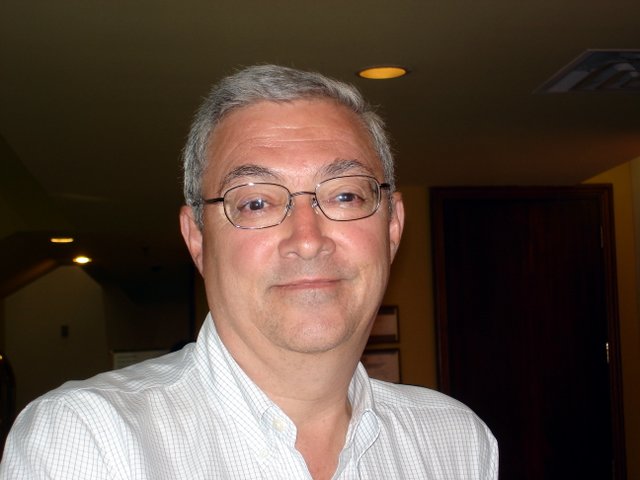



For now Good Luck to all the contestants.
June 16th, 2010 ~ linda ~
No Comments
With only a few days to go before the open team trials begin I thought I would have a look at the teams playing in the Round Robin and check out their convention cards. If you would like to do the same, it is easy because the USBF has conveniently posted the cards on their website. Just go to list of teams and click on any player to see their convention card. Unfortunately most of the pairs have not posted their convention card but as required have simply posted the bids that require a pre-alert (special preparation).
So far I have looked at 26 pairs before I stopped to clear my head. Here are my results so far. Most won’t surprise you but perhaps one or two items will.
A) Most of the field I have looked at so far plays a 2 over 1 variation usually with a strong notrump. No surprise there. There is a standard based system but there are several strong forcing club and a surprising number of multi-way club variants with 1C being for example a strong balanced hand, a weak notrump or clubs.
B) 10-12 notrump is very rare indeed and even 12-14 notrump[ isn’t all that common with most of the field playing 5 card majors and strong notrump
C) Players who play 2/1 are generally playing weak 2 bids of some kind. Flannery occurs now and then and even the odd 2D multi.
Are you surprised so far? Well here is one that is “newer”
D) Almost everyone is playing some sort of transfer advances (usually one under) in competition. The most frequent situation is after an opening bid and an overcall by the opponents. But players are using transfer advances in other situations too. This seems to be the norm rather than the exception so take note.
E) Most of the players play 3rd from even low from odd or 3rd and 5th against suit contracts with fourth best being the system of choice against notrump.
F) Multi-Landy which strangely requires a pre-alert is the most common defense over strong notrump. 2D showing a major has been declared “special” by the ACBL (I guess that means the USBF too), 2H and 2S showing that major and a minor or 2C showing both majors are still user friendly
So most of us watching most of the event shall find the North American style of play something we are used to. I guess it means that the efforts to slow-down innovation in ACBL country seem to be working that way for many partnerships. Sorry, I couldn’t help myself.
But I can’t wait for it all to begin! Roll on!
June 15th, 2010 ~ linda ~
2 Comments
I like playing with Sylvia on BBO. She is cheerful, forgiving and funny and a good player too. I told her yesterday that she was a great partner because she always made me laugh.
Here are a few moments from our game yesterday.
Vulnerable Against Not
Sylvia
 A6
A6
 AJ98652
 104
104
 108
108
Opener passed. What should Sylvia bid? I decided to consult the preempt meister. He liked 3 better than 1 and 2 not at all.
At out table Sylvia opened 3 and I bid 4. We played it there making. Here is the whole deal.
| |
Linda
3
Q104
AKJ32
9742 |
|
| West
K10987
K7
876
A65 |
|
East
QJ542
3
Q95
KQJ3 |
| |
Sylvia
A6
AJ98652
104
108 |
|
4 makes and 4 doubled, contract at the other table goes down 2. For an 8 imp win for us. At the other table where Sylvia’s hand opened 1, it was easy for the opponents to get into the auction in spades. So you can see the advantage of Sylvia’s choice of bid.
I had some fun as declarer on this deal. We were playing 4 after Sylvia had shown big diamonds and a spade fit. I have rotated the hand.
| |
Sylvia
932
A102
AQ10964
4 |
|
| West |
|
East
|
| |
Linda
AKJ54
J653
32
A2 |
The opening lead was the 7. How do you proceed? The 7 looked a lot like a singleton. But on the positive side if I lost the diamond finesse I might still have some chances even if East won and returned a diamond. Still it would be a problem. If diamonds were 4-1, I could rise and hope that hearts would work for me. What would you do?
I decided to put in the Q. One thing I was sure of was that West was not leading from the Jxxx. And you know what? It held with East contributing the 8. So by this point I was pretty sure that West did not have four diamonds (the spot cards didn’t seem right) and that East not surprisingly wanted a heart return. Given the diamond situation I thought I was safe in finessing a spade. So I did and it the J held. This hand was getting to be more fun. I played the A both followed with the Q dropping on my right. I played a diamond to dummy and West played the K as East followed low. I ruffed out the J which was with East. West had indeed led a small diamond from the Kx. East had falsecarded in spades with the Q10x. Anyway 4 plus 2 was now in the bag. It was a fun hand with fun defense. The other table was in 3NT which did not make.
| |
Sylvia
932
A102
AQ10964
4 |
|
| West
87
Q74
K7
J87653 |
|
East
Q106
K98
J85
KQ109 |
| |
Linda
AKJ54
J653
32
A2 |
June 4th, 2010 ~ linda ~
1 Comment
Ray and I occasionally joined by others watched the match between Gartaganis and Priebe And the bridge was very good occasionally crossing over into the truly sublime.
3/4 Quarter SemiFinal Match CNTC
The actors were:
Paul Janicki, James Priebe, Robert Kuz, Barry Senensky, Stephen Cooper, Jordan Cohen
and
Judy Gartaganis, Nicholas Gartaganis, Gordon Campbell, Piotr Klimowicz
Ray and I were watching Gord and Piotr. Coming into the start of the third segment the score was close with Janicki leading by 4 imps.
Board 1 was interesting even though it didn’t affect the imp score very much. Deal rotated.
Priebe opened 1 and Campbell bid 1NT ending the auction. He got the lead of the J which he won with the Q. How do you proceed? It seemed right to attack diamonds and it was too soon to use up the spade entry. You could lay down the ace and then decide whether to play the Q next or the A. Gord however had a different plan. He played a low one. Priebe won the K on his right and switched to a spade, Janicki’s Q forcing the A. The A was almost certain to be onside now. Gord played the A, cashed diamonds and was led a club to his king. Another club endplayed Priebe who had to concede a spade trick to dummy’s jack, making 2. I would have liked to have made some sort of bid on Janicki’s hand over 1NT. But if you have no way to get both major suits in, the bid is a bit awkward.
In the Closed Room things took a very different turn when Judy opened a Precision 2 with the club-spade hand and Judy and Nick found the spade fit and got an aggressive game. This went three down on good defensive play by Cooper and Cohen and an imp to Priebe.
6 especially played from the North hand is a pretty good spot on this Board 2?
It was easy
Playing precision it is safer to open hands with a lot of playing strength but fewer defensive tricks and Judy took full advantage of this when she opened 1 in second chair. And with Colin I might have opened 1 intending to reverse into spades. Anyway this worked fine. Nick was never stopping short of the spade game. 5 would have been a good save but had Cooper and Cohen continued it’s possible that their opponents would have found their way to slam. Something very odd happened at the other table when Priebe and Janicki stopped in a partscore! It started when Jim decided to pass the South hand. Campbell opened 1 and Piotr bid 1. Now Jim doubled which was probably not the best choice. Cooper bid 3 and Janicki with the north hand chose to pass. I know you can talk yourself out of bidding opposite a passed partner but look man, partner has majors and you have an opening bid full of major suit cards push a bid out there. Jim continued with 3 in the pass out chair and still they couldn’t find the game ending in the spade partscore. This is the kind of board you want to forget forever and I will say that it was an anomaly for them.
And Gartaganis had taken the lead by 5 imps. Janicki regained the lead on Board 5 when Campbell-Klimowicz treid for a game that had no play.
June 2nd, 2010 ~ linda ~
7 Comments
The induction of the first group to join the new Canadian Bridge Hall of Fame was a simple affair. Canadian bridge players wearing jeans, slacks and shorts crowded a good sized meeting room in the Markham hotel where the Canadian Team Championships are being held. Bruce Elliott was there along with Sami Kehela, Eric Murray and Sam Gold’s daughter from California (there to represent her father who passed away a few years ago). Bruce also represented his long-time partner Shorty Sheardown, the fifth inductee. One could not help but think that this year’s group was a fairly easy selection and over time the decisions for new members would get harder and perhaps a bit more controversial. As I sat in the room, I realized that I was there in a group of my friends. Fred Lerner had come down to find a team for the Seniors and had succeeded. Francine Cimon, a dear friend, sat next to me. Andy Altay, who went to high school with me, sat a row behind. A row ahead of me, John Gowdy was enjoying himself immensely. I had known these people, the older ones at least, for forty years. This was a place I belonged.
I think we all felt that way. There were no strangers in that room. CBF President Nader Hanna said a few words to get the ball rolling. He was one of the few people in that room dressed in a suit. John Carruthers, also well-dressed, came to the microphone. You could see he was used to dealing with Eric Murray who shouted out quips at every opportunity. When Eric asked him why he named him last in the list of inductees, John replied that it was for the same reason he told the ACBL that Eric should be the last one called upon in the Ceremony to induct him and others into the ACBL Bridge Hall of Fame. It was because Eric was an impossible act to follow. “Anybody following you will just die.” I should say that Bruce Elliott didn’t sit there quietly either and was quite ready to throw in a one-liner from time to time.
John started off by talking about the accomplishment of each of the players: Shorty and Bruce and then Sam Gold. Sam had been a force in Canadian bridge, Canada’s second life master and a very fine player. JC talked about how Sami, who is not known to give undue praise, had said of Sam that he and Cohen had played as well or better than Murray and himself in a particular World Championship. Eric’s voice shouted out from along the head table; “He was wrong!” Joey Silver came up to talk about Sam Gold after John was finished. And the audience affectionately listened to Joey, who at times rambled with his remarks which were not prepared but were said lovingly. He talked about how Sam had been such an important influence on more than one generation of Montreal bridge players. Francine, sitting beside me, agreed. When he started to sit down but then came back up I couldn’t help but yell, “Next!” Joey’s trademark comment on BBO Vugraph when a deal is effectively over with but the players haven’t claimed yet.
Then it was Sami’s turn. JC talked about how Eric and Sami had both ‘table presence’ and a ‘presence at the table’ causing even the great Italian star Giorgio Belladonna to revoke twice against them in the world championships. After John listed his many accomplishments, Sami surprised me by giving a speech himself. He talked about coming from England to Canada as a young man. Soon he met Eric, whose regular partner Doug Drury ‘had finally had enough, and escaped to California’. He told a story about how when he was extremely ill he had received a note from Eric which said sympathetically, ” I have been informed that you are dead or dying. If you pass on I will remember you as an adequate player with some bidding quirks.” You could tell from Sami’s stories the deep affection he had for Eric. Sami’s one regret was that he had never won a world championship, coming second many times to the Italians. As he put it; “When we played, for one reason or another the Blue Team were unbeatable.” Well said; we all understood the hidden meaning.
Finally it was Eric’s turn. After stating that Eric was the most successful Canadian bridge player ever, JC went on to describe too his many accomplishments as an administrator, how Murray had ended the Ontario Bridge League and brought Ontario into the ACBL and how he had been the driving force in creating the Canadian Bridge Federation. Ray and I were quite proud when John talked about Roy Hughes’ great book ‘Canada’s Bridge Warriors’, which chronicles the partnership of Eric and Sami. Then Mr. Murray got up. And he had plenty to say. He was as ever, a wonderful and amusing speaker. He even had some bridge hands to share as he took swipes at his fellow inductees Bruce and Sami. He described one hand where it had been passed to him in fourth chair. He had only a jack. He knew something was amiss and he could see Sami shaking across the table. So he thought he would have some fun. He pretended to study his hand for a while and then shake his head as if making a tough decision to pass and finally announced, ‘I have no majors so I pass’. Sami who held 21 high card points or so thought they had missed a slam. Eric let him suffer for a while and then finally showed him his hand. ‘And we got a top board!’ he crowed delightedly. The Elliott deal involved Bruce being on lead with two aces aginst 6NT doubled. Bruce cashed one of them, and then switched — eventually he had to throw away his remaining ace, and took the setting trick with the eight of diamonds!
But it wasn’t Eric’s humor or Sami’s affectionate stories or the list of accomplishments that made the evening great. After each player was presented with his award, everybody in the room, unasked, stood and applauded them. This was an audience of peers and each of us was acknowledging the great contribution made by these historic players. It wasn’t even the kind of standing ovation you sometimes give in the theater for an exceptional performance. This was more than that. It was a feeling that all of us in that room were comrades.
June 1st, 2010 ~ linda ~
No Comments
Ray and I went to up to Markham in time to watch the last few boards of the CNTC. I watched a few hands and chatted with a lot of people. I got to say hello to the entire Cimon team and even got a hand from Francine. Audrey Grant was there watching her husband, David Lindop who was fighting for a qualifying position. She promised to help raise some money for the Teams next year. Audrey is always a good person to ask for help. It was terrific to see everyone and then wait the final moments to see who would make the final eight.
Coming into the home stretch 1. Gartaganis 2. Todd 3. Janicki 4. Whiteman 5/6 Rayner and 5/6 Thurston looked pretty safe In the hallway I met up with John Rayner and the Piglet and they both felt very confident – yes, it was mathematically possible to miss out but it wasn’t going to happen and in fact they had a winning tie but that was enough for a tie for fifth/sixth.
It was the other two places that were more or less up for grabs. Going into the round: Hanna had 358 Gamble 352 Altay 352 Jotcham 345 Korbel had 345 When Hanna beat Todd decisively to win 21 VP they had locked in a spot. There was only one more.
Both Jotcham and Korbel seemed like they had little chance. Jotcham locked up 20 VP so if Korbel was to win they would certainly have to beat that total. They were fortunate enough to be playing Altay. A decisive win against Altay could blast them past both Altay and Jotcham. They won by 23 VP. Altay was out and so was Jotcham. Only one more hurdle for Korbel. Gamble was playing Anderson a team that was at the bottom of the field. A small win of 17 VP would see Gamble as the clear winner. But Gamble had a small loss winning only 13 VP not enough. Korbel had made it through! There was much surprise and pleasure.
I talked to Darren Wolpert and his mother Hazel. She had been more worried about Darren’s win than her own. They will both play on tomorrow. Darren in the CNTC and Hazel in the CWTC. I also had the chance to meet and talk to the Todd team. Now that I have met them and seen them in action I know that I will be much more confident of their results. Could they win the whole thing? It seems possible to me. After a lot of chatting most of us went up to the meeting room where the Hall of Fame ceremony was being held. I want to write about that because it was a real love-in. It was fun and charming with a lot of laughs and good stories. But I will save that for tomorrow. Congratulations to all the winners and good luck in the knockout. For all the results Round Robin Results
June 1st, 2010 ~ linda ~
1 Comment
In the two open events its all about qualifying. With less than 25% of the teams qualifying and about a third in the the CNTC making it through to the knockout phase is not all that easy and every year some of the favored teams don’t make it.
In the CNTC after 20 rounds things are very tight around the last two qualifying spots. Rayner is in 7th with 326 which gives them a bit of head room but 8th through 11th are tightly bunched. 8. Jotcham 319 VP 9. Gamble with 316 VP Team 3 10. Ather 313 VP Team 1 11. Korbel 312 Rayner looks safe with two easier matches to finish their round robin. Both Gamble and Jotcham has two opponents who haven’t had a good week although if I had to play against a spoiler I would not want to play against team 20 Daniel Lavee, Jeff Smith, Anton Blagov, David Sabourin, Samantha Nystrom who are one of Gamble’s last two opponents. Both Ather and Korbel have greater challenges. Good luck to all.
Starting tomorrow there is Vugraph so I should have some more interesting blogs. I will also have a chance to talk to some of the players this evening and watch the Hall of Fame ceremony. Eric Murray will be making a speech which is always an interesting experience. The Senior Team Championships starts tomorrow. It is the second most challenging event of the week. We won’t know the entrants until tomorrow but many of those from the CNTC who did qualify will play and there will also be some new entrants. For example, Mike Yuen tells me he is coming from British Columbia to play.
Update: One more match. Some teams are locks but there are at least 9 times in a battle for the 9 spots.
1. Gartaganis 2. Todd 3. Whiteman 4. Janicki. are well placed or locks for a qualifying spot
5. Thurston 366 6. Rayner 363 look good but there is some risk
7. Hanna 358 Tied 8. Gamble and Altay 352 are fighting it out for a spot (notice that there are one two many teams in the top 8!)
10. Jotcham at 345 needs help to make it.
One more match and we move on to the knockouts
In the Flight B Liu has a mammoth lead but there is a battle for the fourth and final playoff spot
In the Womens the pretournament favorites are in 1, 2 and 3 Cimon, Smith and Demme and it looks like Huang will be fourth. With four of eight qualifying the round robin was a bit of a laugher for the top teams.


 and Lew Stansby bid 1NT doubled by Kit Woolsey. Chip Martel had nowhere to go. The auction had been the same in the Open Room where Adam Wildavsky and Doug Doub had gone down 3 for –800. The hand is obviously hopeless so Stansby’s job was to reduce the damage and as we said at the start of the play down 2, –500 would be a triumph.
 J86
J86  J73
J73  10974
10974


 Subscribe to our feed
 Bridge-related